Our socials, not our trap
How the Newsmast Foundation builds community-first social media apps on open protocols, moving whole communities off Big Tech one 'digital home' at a time.
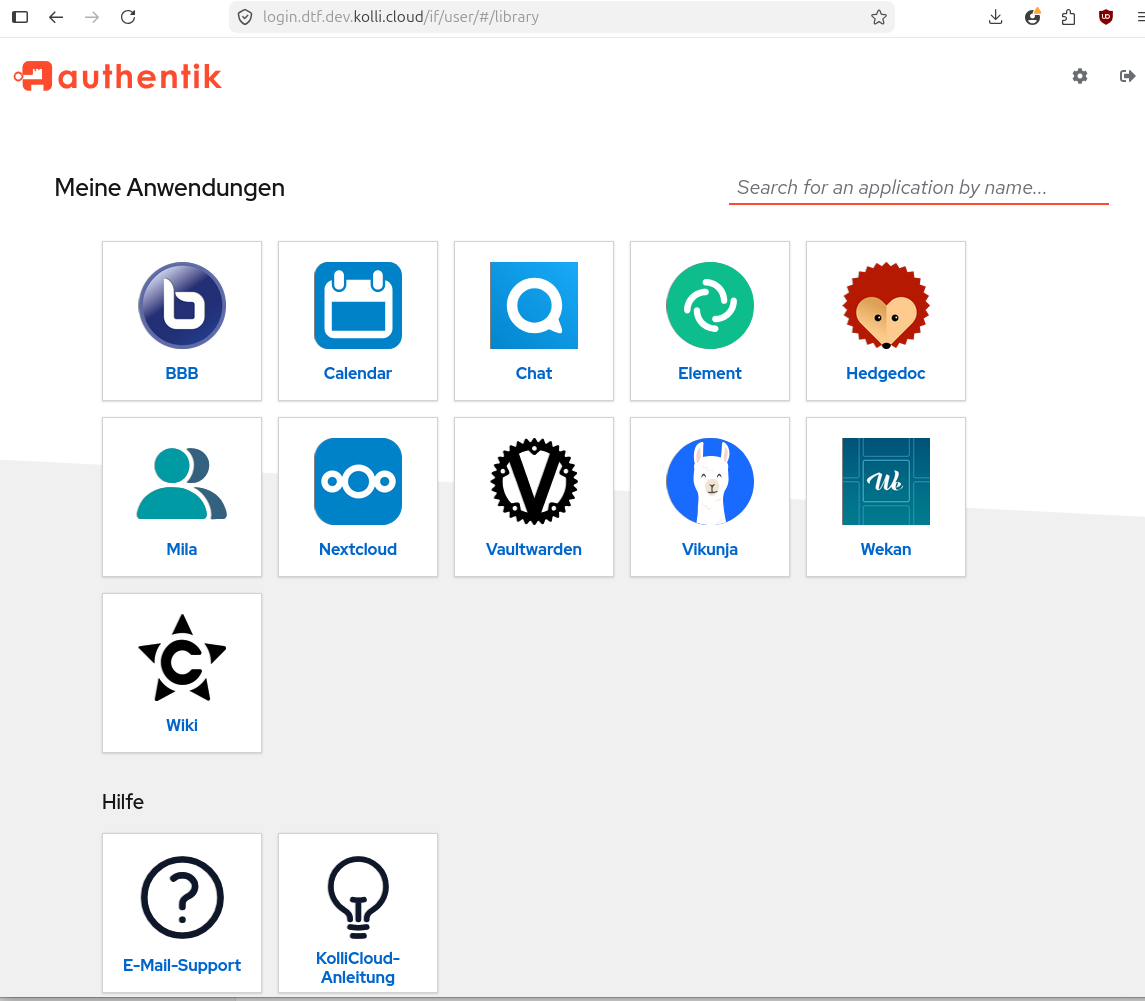
In fostering digital counter-infrastructure to resist Big Tech, we think broadly in terms of ‘OurDesk’ (replacing the traditional ‘office suite’ of Google Docs or Microsoft 365), ‘OurSocials’ (open social media, community-first) and ‘Specials’: more specialised tools needed in specialised kinds of collaboration (in food networks, say; or transportation; or research). The Newsmast Foundation and its apps look to us like as good as it gets right now, in OurSocials.
Newsmast builds on open protocols. It runs on an open-source code base maintained and evolved by the Foundation, that can be self-hosted by communities. Every Newsmast app is configured as a ‘digital home’ for a particular community, where members can chat, post and share things, and read and discover stuff of common interest. And its mission is knowledge sharing, peer-to-peer, people talking to one another, in cultivated relationships.
Origins
NewsMast came out of the autumn 2022 takeover of Twitter by Elon Musk and responses to that among journalists. As well as opening a server in the fediverse, newsmast.social, Michael Foster (director, ex-Reuters and Financial Times) and others set up The Newsmast Foundation. The foundation is about onboarding organisations into open social media. See Laurens Hof, December 2023 News curation in the fediverse.
Getting people to move individually from Big Tech platforms is hard, network effect is powerful, it’s much more effective to move communities en bloc. Newsmast works basically with somewhat-organised communities: organisations. This is the Newsmast theory of change. Newsmast apps belong to specific communities, each contains the media that the community decides are useful to the community. But each community, through its own custom app, is connecting its contributors across the open social web, organising relationships in digitally mediated space, as widely as it needs to.
Each app is a ‘digital home’ for that community, where members can chat, post and share things and read stuff of common interest.
Twelve apps to-date, custom for specific communities, are all downloadable on app stores. Other apps are in development.
What’s in a Newsmast app
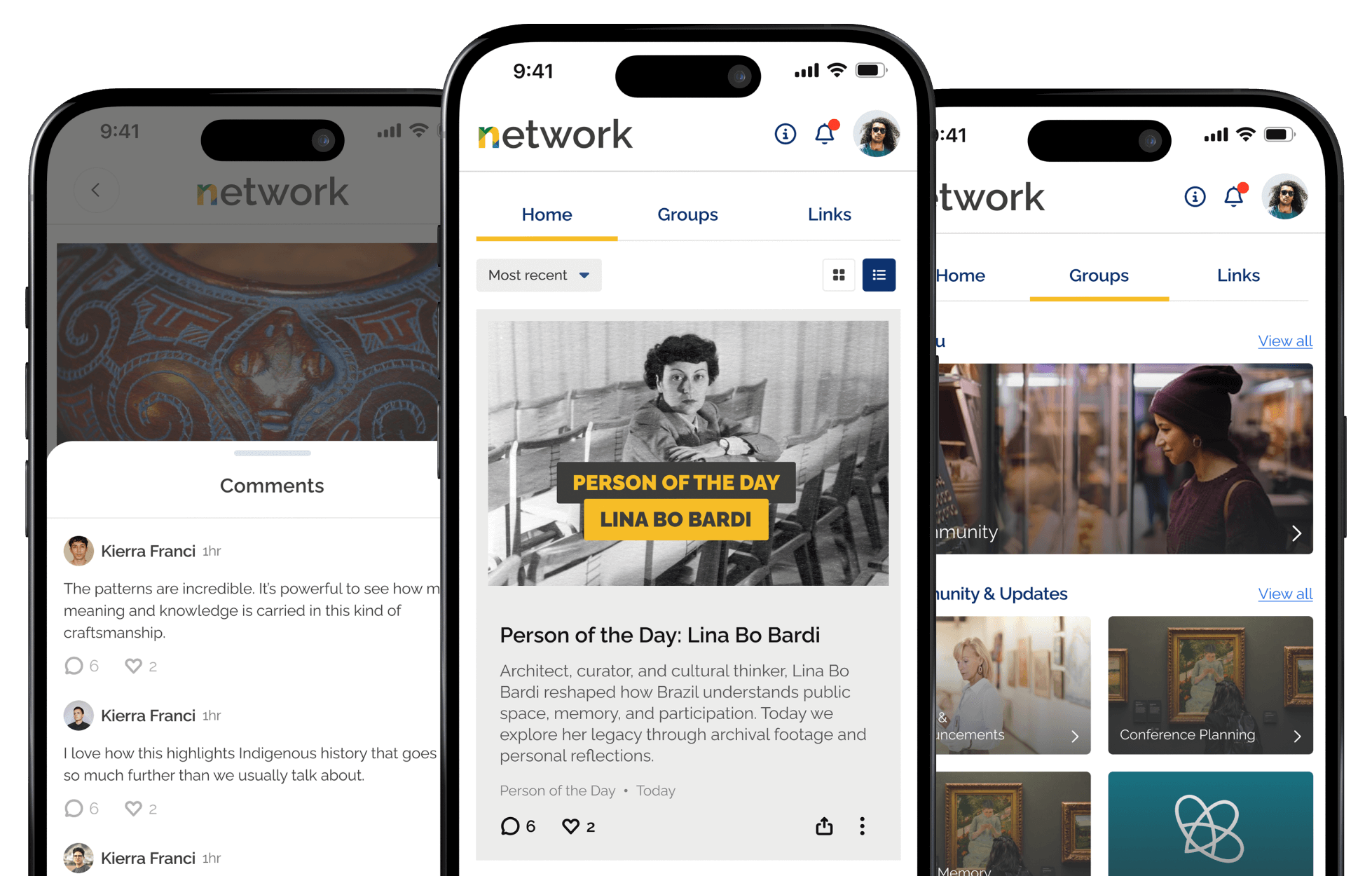
The apps look very nice and handle well - Newsmast believes strongly in good UI/UX design, for mobiles (though they run in web browsers too, with fewer features). The apps run on open protocols. Currently this means Mastodon with quite a few tweaks, like separating direct messages from the community timeline (otherwise it can be embarrassing). But under the hood there’s plenty more going on in a number of layers, including moderation, custom feeds and filters, and event calendars.
Different communities have different degrees of complexity in their digital community space. Newsmast approaches this through four ‘flavours’.
The simplest flavour is ’community’. Toot Wales (Tŵt Cymri), is populated by Welsh speakers around the world; it’s in Welsh (and English). You can see you’re in Tŵt Cymri country: their logo is on it, their name at the top of the screen, it’s in their colours. When you open the app you see their local timeline. This is a world of 10,000 people with one thing in common: Welsh. You can do the usual social media things: follow, post, share photos, paste gifs, get notifications, send direct messages. Newsmast does any language. Community apps run on the Mastodon protocol - with tweaks.
‘News’ - Leicester Gazette is a small independent UK newspaper. They can’t afford a dedicated newsroom app. But in their Newsmast you can see news headlines, read full articles, listen to podcasts (they play inside the app). You can go from the newspaper to the local timeline where, for example, a photographer posts local pictures and local people respond. People point up aspects of the local conversation about living in Leicester, using hashtags. Additionally there are channels - external news feeds assembled by the newspaper for their community of readers.
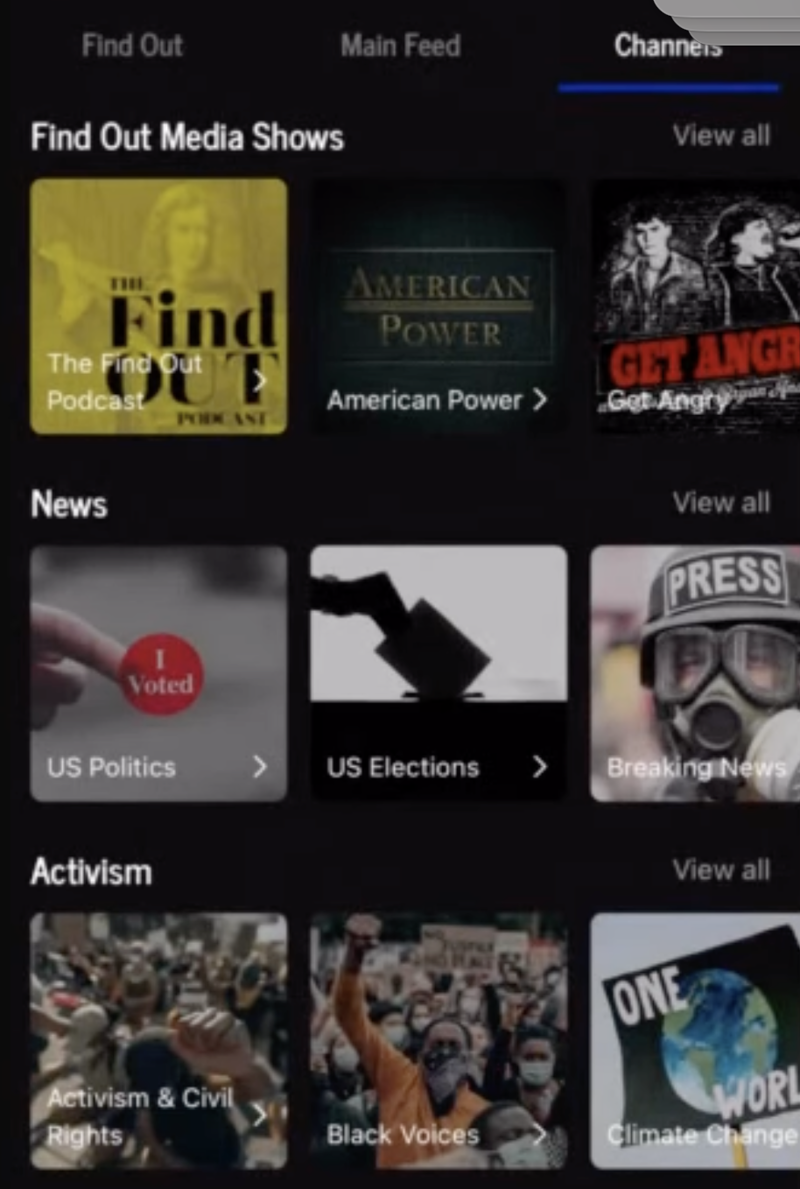
‘Content Creators’ aka influencers. The US anti-MAGA group, Find Out Media are podcasters ‘of a fairly raucous nature’. The app carries their podcasts, and listeners can reply-to/boost/etc posted podcasts. This app features threading of posts, a rare feature in Mastodon clients, added by Newsmast. This community has custom feeds from the internet, inside the app, assembled by Newsmast’s custom curation tools. It’s a lively space, followers can assemble in large numbers, fast. Find Out is a national formation, so the app features local public groups or chapters. More complex, then, than Leicester Gazette or Tŵt Cymri.
The most complex flavour is professional networks. Intrinsically these are distributed communities. They include international communities of research scientists, a large African girls’ education charity (across seven African countries), museums in Brazil (a LOT of them! - called memory institutions, some are quite small). The museum community’s app is Memoria Digital, funded by the Brazilian government. This community has content, timeline, etc, as usual; the additional thing is calendars, driven by Lauti, a German open-source tool. Events in the calendar link to information on the event, on location (including maps), on organisers, etc - rather website-like or wiki-like.
Basically, members of a community are just going to have one additional (community) app on their phone. People are on Leicester Gazette or they’re working in Brazilian museums, or they’re Welsh speakers, or they’re excited by a podcast campaign.
Escaping Big Tech, mobile-first
Newsmast is mobile-first. Because a Mastodon service is underneath the app, many features can be accessed also in a web browser on any device - though not all, and not some of the most extended ones.
Newsmast aims to meet users where they are, and to compete with big tech where it is; and where they are is on apps. If you’re looking to add an alternative to Instagram or X or Facebook, it needs to be on the phone, it needs to be in the App Store.
A charity in Africa, CAMFED, helps young girls go to school. When they leave school, they get a job, they join CAMFED. A big thing when they get a job is buying a mobile phone; they come loaded with WhatsApp as default. A goal with Newsmast is to replace that app on that phone, with the CAMFED app, which they then will stay with.
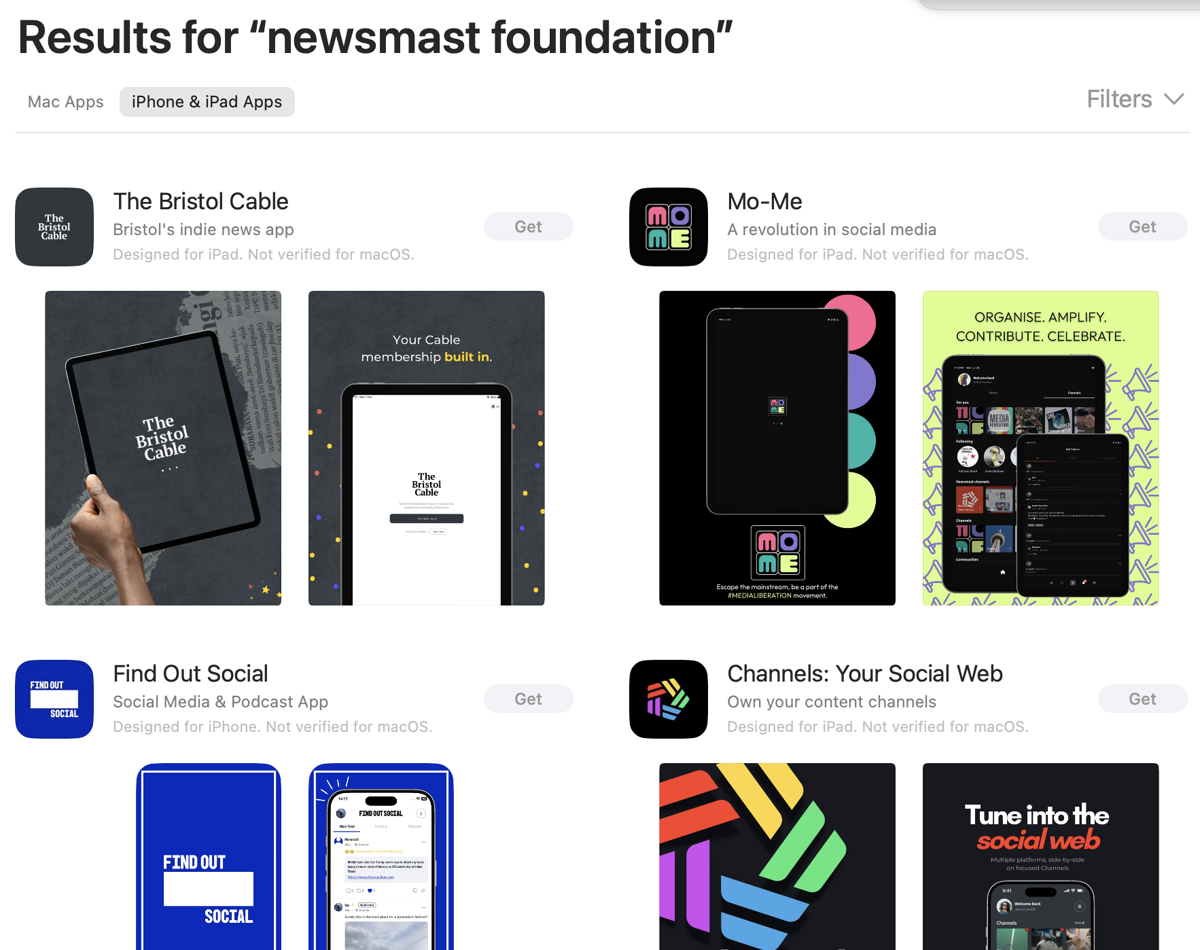
Newsmast has apps in Android and iOS; here are some of them in the App Store.
Protocol agnostic
Newsmast is protocol-agnostic. Their principle is to use the protocol(s) that serve best. Mostly they work for organisations with quite small numbers of members; even in the tens of thousands they’re small and focused, compared for example to the user base of X or Instagram. For these communities they build on ActivityPub (Mastodon). But Newsmast is active in a European alliance which also covers ATproto and Matrix protocols, jointly aiming to develop the open social web - The European Social Stack - as a counter to the corporately-captured web of mainstream, globalised social media.
Moderation matters
Moderation is pretty important. There’s building your community, providing a well-grounded, meaningful focus (through media) for shared attention, mutual exchange and collaboration; then, close to Newsmast’s heart, there’s keeping your community safe. “It’s super important to keep the digital space safe.”
The Find Out podcasters in the US did get quite a lot of attention from Russian bots. Newsmast was able to fend them off using various bits of tech.
There are layers. In Newsmast a community isn’t creating a global town square where random people come in and shout or disrupt; people spot spammers very fast in their space, report them; they get banned. Behind the scenes Newsmast enables global blocks and filters before external content hits the app. Then, within an app there are moderation tools. Newsmast is experimenting with quite advanced moderation tooling from IFTAS.
Political economy and infrastructure
It’s important to talk about the work that’s under the hood of alternative digital infrastructure. As well as maintaining and evolving the open-source configuration toolkit and hosting apps online, NewsMast does custom configuration work for each account holder. Lots of skilful work, building on a lot of experience; skilled labour needing to be paid. So: where does the income to pay wages come from?
As a foundation (a UK educational charity) Newsmast does have some small private donations, some bigger ones. It’s hard to get grants in this space. But basically, like they encourage organisations to become self-sustaining, Newsmast believes the app service should too. They have a revenue model in three layers. Apps have a low monthly price, from $250 to $1,000 depending on size; the upper band is for very large organisations. Then a small setup fee in the order of thousands of dollars or euros. Finally, where Newsmast hosts the site, there’s a hosting fee. They may also help with some community building.
Newsmast is looking to be self-sustaining through revenue at a low level by working with a lot of organisations. The core thing is, keep it cheap. One organisation paying for their app at the lowest level - setup €2,500, €250 a month hosting - scoped out an equivalent provider and were quoted around £35,000.
With infrastructure, after all, to keep water coming out of the taps at home, we have to pay some workers some wages! But the free software aesthetic does have a broad expectation of privileged ‘free labour’ behind it. And many people imagine that Big Tech infrastructure is ‘free’, not recognising that actually they’re paying hidden rents and tolls, in the currency of metadata.
What complements a social stack? Federation
A stack of social media doesn’t provide every tool that a civil society organisation or some co-op organisers might want. What digital tooling do communities run alongside NewsMast?
As organisations, they probably have their own internal places to do documentation and admin; probably using CRMs and database tools to manage payments, marketing and suchlike. It could help a lot if there was a decentralised network where marketing tools, organisation tools, documentation tools, internal communications tools, etc can be mobilised. These begin to matter when a community has grown to be an organisation, with intentions and commitments and projects. The social aspect matters but what makes an organisation work is many different things. In the Democratic Tech Fund we think in terms of OurDesk and Specials alongside OurSocials.
Newsmast has incorporated WordPress and Ghost for content management (websites, blogs), Lauti for events, CiviCRM for membership and mailing. One of Newsmast’s science networks just became a collective, and is experimenting with not having an executive director, looking at decision-making toolings in the commons.
Some of this can be handled by federation across tools inside an app-container like Newsmast. But also, federation across infrastructure providers (and thus, across the communities served by those infrastructures) is basically important here. Rather than the highly aggregated, complex and (tacitly) centralised-but-abstract platforms of Big Tech. Complex infrastructure can be hard to maintain, in a small hosting organisation that’s close to its small communities of users. All the ‘tool feeds’ need to play nicely together (protocols!), and a fluent (mobile?) interface matters a lot.
There could be interesting conversations to have about this, down the line? About scale, richness and federation, of tools, of platforms and of communities.
Working in community inside digital space
In terms of Newsmast flavours, Community, News and Influencer communities are somewhat similar. If you think of it as a digital room, if you just say “This is the Leicester Town Hall, everyone come inside and start talking,” most people would stand on the outskirts and just passively check it out. By having someone from the Leicester Gazette, an investigative news publication, stand up in the room and say, “This is our latest investigation, it affects you in this way because you live in Leicester, what are your thoughts and feelings?”, you start getting people talking. The same thing works with influencers; also with hyper-local groups that have a shared interest: “Here’s something significant in your (our) world, what d’you feel about it?”
For ‘professional’ organisations, community is a bit different. They’ve already got shared network. So it could be that they go in and say, “Right, on this day we’re having this meeting, please everyone, start sharing thoughts in this thread?” Even so, you could see this as a version of: “Here’s something significant in our shared world, what d’you want to contribute?” The main takeaway so far may be that some kind of community lead is needed, who takes responsibility for starting conversations, talking to people and helping people glue themselves together.
Of course we’re not all - any of us - in just one place. You might live in Bristol or Leicester and want to track anti-MAGA stuff in the USA, or you might be a scientist in Africa: you’ve got different sides to you.
People and communities will want to connect through different community-first apps, which are doorways into different actual communities; out across the fediverse or through the ATmosphere. And any dedicated Newsmast app is already a doorway on to the world. Federation again: socially.
So this is not social media, it’s social networking. Media is about broadcast; networking is first of all bottom-up, an actual social reality. Machinery for solidarity. Basically, we’re stronger together.
What we want this to inspire
We are featuring Newsmast because we think it should be studied, not just admired. If you can see this kind of need emerging near you — we want to help you build the case for it.
The Democratic Tech Fund exists to do this collectively: discovering what already exists, understanding what your community needs, and mobilising funding — seed support, crowdfunding, public-private match funding — to make a credible alternative real. We are not alone in this: we work alongside Commons Network, Goteo, Waag, the Co-op Cloud Federation, eCommons, and others.
Tell us what exists already, what is missing, and what a cooperative alternative could look like where you are.
Get in touch with the Democratic Tech Fund →
Support this work via Open Collective →
*This story draws on our community call with Newsmast, hosted by the Free Knowledge Institute with the Democratic Tech Fund and the Co-op Cloud Federation.
This is not social media, it's social networking. Media is about broadcast; networking is bottom-up, an actual social reality. Machinery for solidarity.