Feeding the Commons: How Foodsoft Keeps 130 Rotterdam Households Fed — From a Server in Someone's Basement
How BioBulkBende, a 130-member Rotterdam food co-op, runs on a single unmaintained server — and what it would take to build a sustainable, shared home for Foodsoft and the wider food co-op movement.
We talk a lot, in this movement, about the Digital Coup: the concentration of communication, cloud, and collaboration infrastructure in the hands of a handful of BigTech platforms. But the same pattern — critical infrastructure with no collective ownership, no shared maintenance, and no resilience — shows up just as often in food.
Industrial food systems run on opaque, centralised logistics that few of us can see, let alone govern. Food co-ops exist precisely to build something else: transparent, member-run, local alternatives to that system. But the tools that make food co-ops possible need the same thing the food itself needs — a resilient, shared, well-tended supply chain. Right now, for one of Rotterdam’s largest food co-ops, that supply chain runs through one server, in one person’s basement, on residential internet.
This is the story of BioBulkBende, the free software called Foodsoft that keeps it running, and what it would take to give that infrastructure the sustainable home it deserves.
Who Is Behind It
BioBulkBende is a 130-member organic food co-op in Rotterdam, entirely run by its members. Founded in 2019 — inspired by Amsterdam’s Voko Amsterdam, New York’s Park Slope Food Coop, and the wider international food co-op movement — BioBulkBende exists to give its members control over the food they buy and eat: organic, affordable, sourced with as little exploitation and as little packaging as possible.
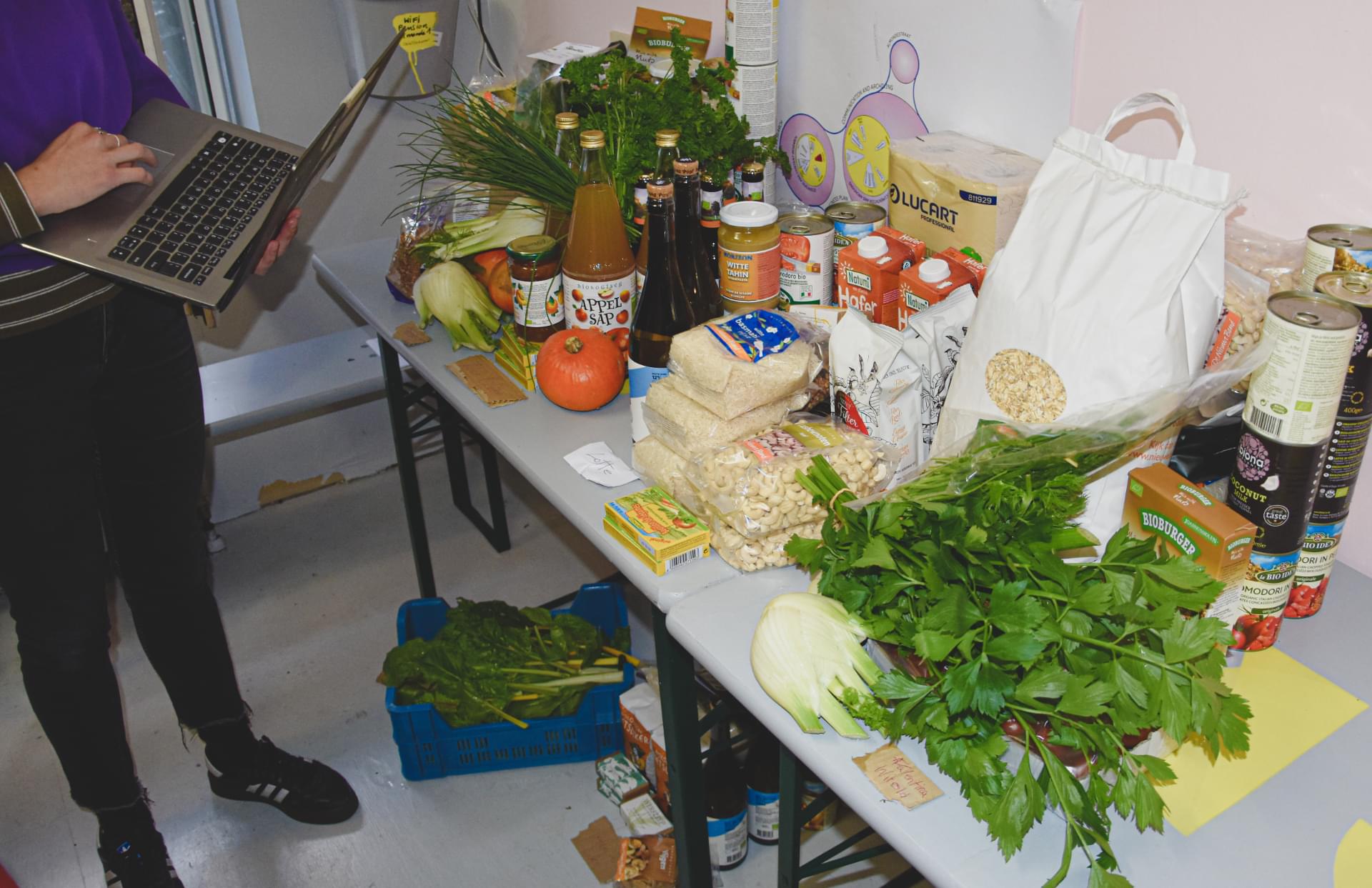
Members order collectively from local producers and distributors across the Rijnmond region for fresh produce, and from the organic supplier De Nieuwe Band/Odin for dry goods, cutting out the middlemen that inflate supermarket prices. There is no profit and no paid staff. Every member contributes: a €15 monthly fee, roughly three hours a month of work, and membership of a workgroup — cooking, set-up, membership, orders, or finance — matched to their interests and the co-op’s needs.
The rhythm of the co-op is simple and consistent: members gather every first Monday of the month, 18:00–20:00, at the Huis van de Toekomst on Jan Kobellstraat, Rotterdam, to collect their orders, share a volunteer-cooked vegan dinner, and welcome new members through a mandatory 19:00 introduction session.
It is, in short, a well-run, values-driven, functioning cooperative — a “collective do-it-with-others supermarket,” as its members describe it. What it runs on, however, is far less secure than what it runs for.
What Foodsoft Is — and Where It Lives
BioBulkBende, like many food co-ops internationally, coordinates its ordering through Foodsoft, free software purpose-built for collective food buying: members place orders, the co-op aggregates them into bulk purchases from suppliers, and the software handles the accounting that keeps a volunteer-run, profit-free operation workable at scale.
Foodsoft already has a Co-op Cloud recipe — meaning it can, in principle, be deployed and maintained the same way any other application in the Co-op Cloud Federation’s shared configuration commons can be: predictably, collectively, and without every operator reinventing deployment from scratch.
In practice, BioBulkBende’s instance runs on a server in a community member’s home, on residential internet, maintained informally by whoever has the time and the knowledge. The software itself is currently unmaintained upstream. Everything works — until, one day, something doesn’t, and 130 households’ access to affordable organic food depends on one volunteer’s spare evenings and one residential internet connection staying up.
Not an Isolated Case
BioBulkBende is not alone in depending on Foodsoft, and food co-ops are not short of cooperative digital tooling more broadly. A number of other foodcoops across Europe already run on Foodsoft. Alongside it sits the Open Food Network, an international open-source network — started in Australia — connecting food-buying groups directly with ecological farmers and producers, with active national nodes including Katuma in Catalonia.
What food co-ops have, in other words, is exactly what the wider democratic tech movement keeps rediscovering: the software exists, the model works, and small, dedicated communities are already running it. What’s missing is the collective maintenance and shared investment that would turn “it works, for now, if nothing breaks” into genuinely resilient, shared infrastructure.
The Opportunity
This is where the case for collective action is concrete rather than hypothetical. Early conversations suggest real appetite for exactly this kind of shared investment: 50 to 60 food co-ops and related organisations have expressed willingness to contribute financially to a properly maintained, upgraded Foodsoft. The software is already proven at neighbourhood scale, with a credible path to serving many more: potentially thousands of households across a network of local co-ops, each independently governed, all sharing a common, professionally maintained technical foundation.
The pieces are, in a real sense, already on the table: a working piece of software, a Co-op Cloud deployment recipe, a base of committed volunteer users, and a pool of organisations ready to co-fund its future. What’s missing is a maintenance team, a modernised codebase, and the collective structure to hold it all together — precisely the gap a fund built for pooling contributions across many small, resource-constrained cooperatives is designed to close.
What This Means for the Democratic Tech Fund
The Democratic Tech Fund exists to help cooperative organisers organise better, and more sustainably: to move projects like Foodsoft from “surviving on borrowed infrastructure and volunteer goodwill” to “collectively owned, resourced, and maintained.” BioBulkBende and Foodsoft are as clear an example of that gap, and that opportunity, as any cloud or communication tool we have looked at so far.
A Funding Circle around Foodsoft’s maintenance — seeded by the food co-ops and allied organisations already expressing interest, and potentially matched by municipal or cooperative-economy funders with a stake in local food resilience — could fund a small, dedicated maintenance team: someone to modernise the codebase, harden the Co-op Cloud recipe, and support co-ops like BioBulkBende in moving off a single residential server and onto shared, collectively governed hosting.
Get Involved
- Join or support BioBulkBende directly — biobulkbende.org
- Explore Foodsoft and the food co-ops already running on it — foodcoops.net
- Look at the wider network of cooperative food-buying platforms — Open Food Network and its Catalan node, Katuma
- Back the maintenance effort through the Democratic Tech Fund, or get in touch if your food co-op — or any organisation relying on Foodsoft — wants to be part of the Funding Circle that gives this project a sustainable home
The food is organic. The community is real. The software works. What it needs now is what every commons eventually needs: people willing to tend it together.
This story draws on input from the BioBulkBende and Foodsoft communities. If you are part of either — or of another food co-op running on Foodsoft — and would like to add your own voice, correct a detail, or expand this piece before it goes live, please get in touch. This is a living case study, not a finished one.
Tags: CoopTools, DigitalSovereignty, FoodSovereignty, CooperativeClouds
For one of Rotterdam's largest food co-ops, that supply chain runs through one server, in one person's basement, on residential internet.