Lessons learnt from crowdfunding the commons — with Goteo.org
Fifteen years, €25 million, and thousands of campaigns later, Goteo.org has built something rarer than a crowdfunding platform: a working civic machinery for turning collective will into collective capital. The Democratic Tech Fund is building its own funding model directly on what Goteo has learned.
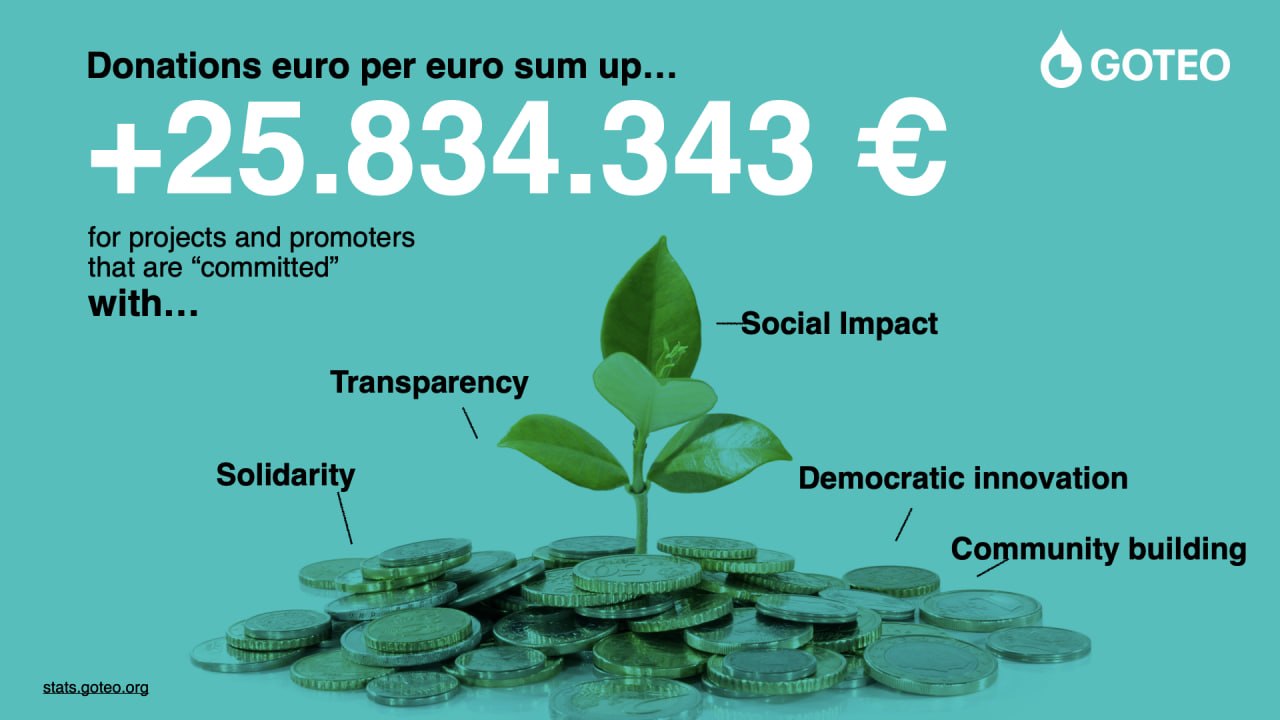
A key element in the DTF’s funding methodology is crowdfunding, and specifically the model our Spanish partner Goteo.org — and its founding organisation, Fundación Platoniq — has spent a decade and a half refining. This story draws on what we discussed with Olivier Schulbaum of Platoniq at DWeb Camp 2026, where he presented Goteo’s experience in a session on sustaining infrastructure movements. It is the foundation for how the DTF intends to fund its own projects.
Fifteen years of small donations, added up
Goteo launched in November 2011 as an initiative of Platoniq, a Barcelona-based non-profit working on civic participation and social innovation since 2001. In 2012, Platoniq set up the Goteo Foundation to run the platform and open-sourced its code under an AGPLv3 licence — Goteo bills itself as the first free/open-source crowdfunding platform, and its code has since been forked and redeployed elsewhere, including as Local Good Yokohama, backed by the City of Yokohama and Accenture.
The sum of all those small donations, gathered from a community that today numbers over 400,000 people across thousands of campaigns, now stands at more than €25 million distributed to civic, collective, and commons-oriented projects, with a project success rate above 83%. Every campaign supports collective action of some kind: people with a mission to change their corner of the world, who put that mission in front of a crowd, ask for support, and — more often than not — get it.
Each campaign carries its own story. A few give a sense of the range.
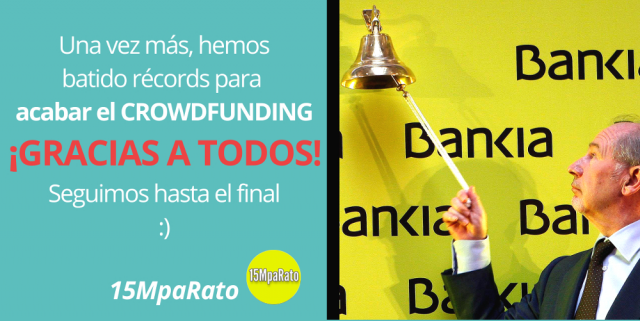 Holding power to account. In 2012, the citizen platform 15MpaRato — initiated by the activist and playwright Simona Levi, working with the digital-rights group Xnet — filed a criminal complaint against Rodrigo Rato, Spain’s former economy minister, former IMF managing director, and then chairman of Bankia/Caja Madrid, along with 32 other bank executives. The legal costs were crowdfunded on Goteo: the campaign reportedly raised 130% of its €15,000 target in under 24 hours, becoming one of the fastest-funded legal campaigns the platform has seen. The case exposed the so-called “tarjetas black” — a system of undisclosed company credit cards used by Bankia and Caja Madrid directors for personal spending — after Xnet published a cache of leaked internal emails. It ended in February 2017 with convictions for 64 defendants, including Rato, and the recovery of roughly €2 billion for around 300,000 small investors and savers. Levi later crowdfunded a second, smaller Goteo campaign to stage the story as theatre, Hazte Banquero, taking the case beyond the courtroom and into public consciousness.
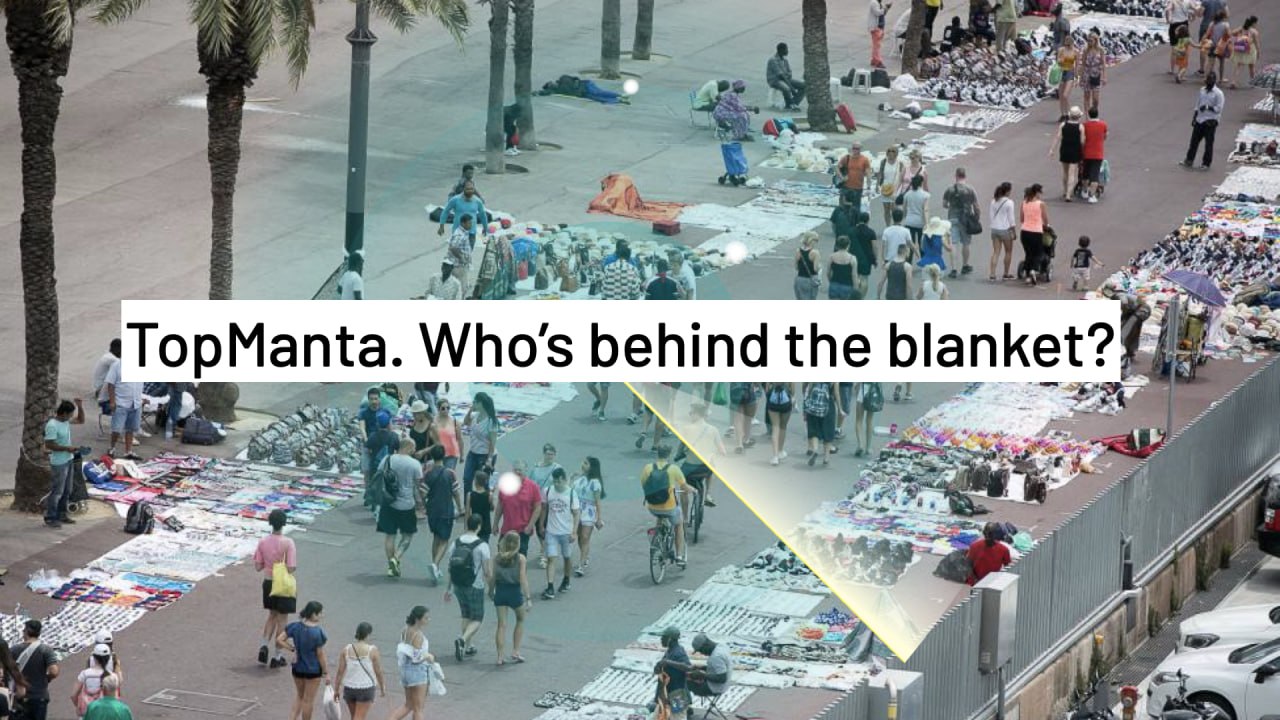 Turning stigma into a cooperative. Top Manta is a well-known name in Spain for the street vendors who lay their wares out on blankets (“mantas”) on the pavement — often imitation goods, and always ready to bundle everything up and run at the first sign of police. Organised since 2015 as the Sindicat Popular de Venedors Ambulants de Barcelona, the group turned the stigma into a brand: Top Manta, selling a legitimate clothing line under the slogan “ropa legal hecha por gente ilegal” — legal clothing, made by illegal people. Their Goteo campaign funded the print and sewing workshops needed to launch that first collection and open a shop in Barcelona’s Raval neighbourhood; contributors were rewarded with the t-shirts and sweatshirts themselves. By 2021 the initiative had become a fully constituted worker cooperative, the Cooperativa Popular de Vendedores Ambulantes.
Building our own infrastructure. In 2018, the Free Knowledge Institute and the cooperative we co-founded in Barcelona, femProcomuns, ran a Goteo campaign to launch CommonsCloud.coop, the cooperative cloud project we helped set up. The campaign required us to build a compelling pitch and video, define a set of rewards — including presale of the cloud services themselves — and, crucially, it ran as part of a match-funding programme Goteo operated with the City of Barcelona to support cooperative and commons-based projects in the city. That match funding doubled the community’s contributions, giving the project both an initial user base and the working capital to get started.
How the mechanics work
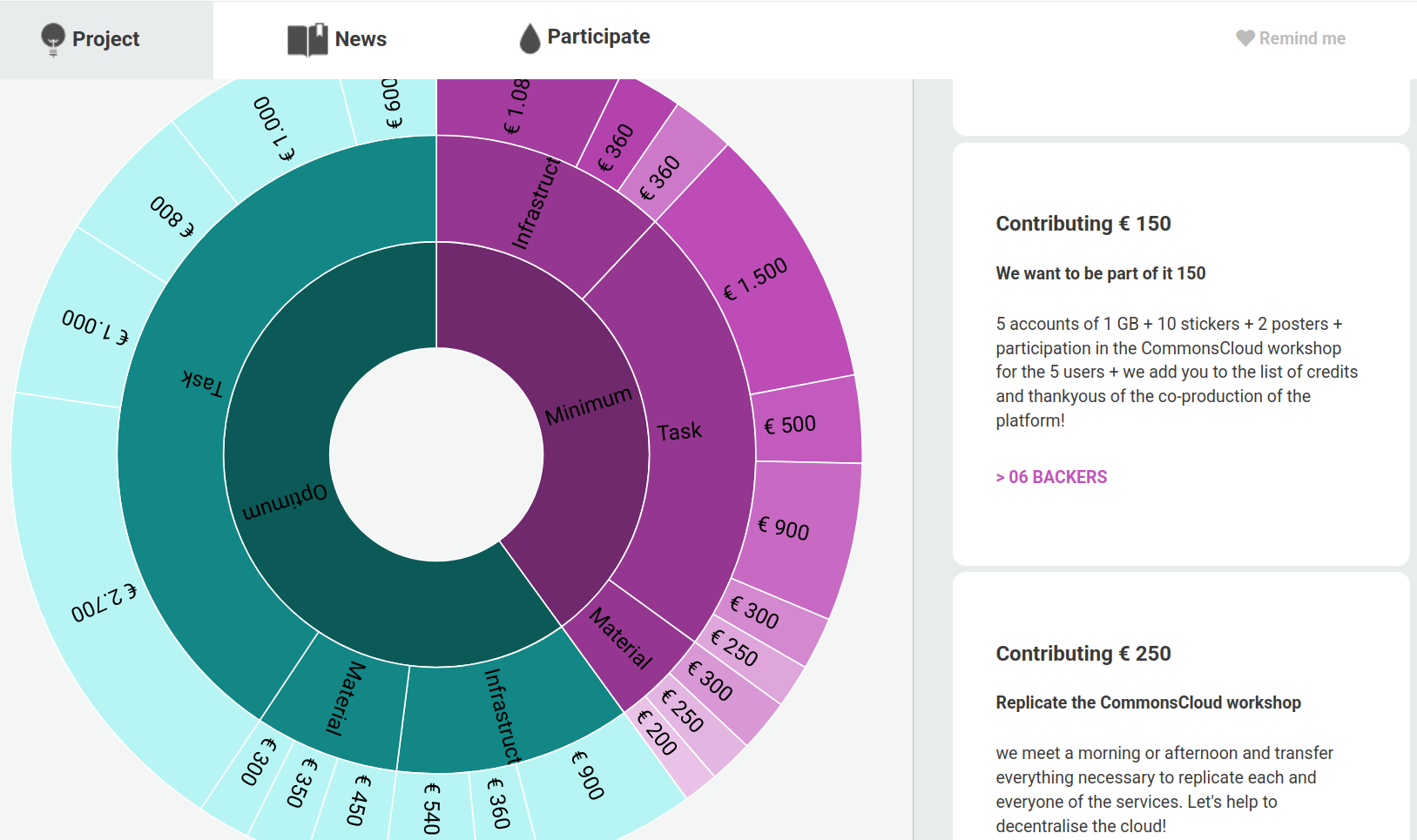
Goteo’s platform is built around two funding rounds, giving campaigns 80 days in total (40+40) rather than the single window most crowdfunding platforms offer. The first round is “all or nothing”: a team must hit its defined minimum budget or the campaign doesn’t proceed. The second round targets an optimum — and often a stretch — goal, for the improvements a project would like but doesn’t strictly need to launch.
Teams define their mission, set out their rewards, and track what they need from the community against what people get in return. Contributors make their donation and can then interact with the team in a public thread; they can choose to appear on the campaign’s public wall of supporters, or stay anonymous. Spanish donors can claim an annual donation certificate that, depending on their circumstances, provides tax relief — a detail that matters when trying to make giving as frictionless as possible.
What we want to build on
The Democratic Tech Fund is building directly on this experience, together with Fundacion Platoniq / Goteo.
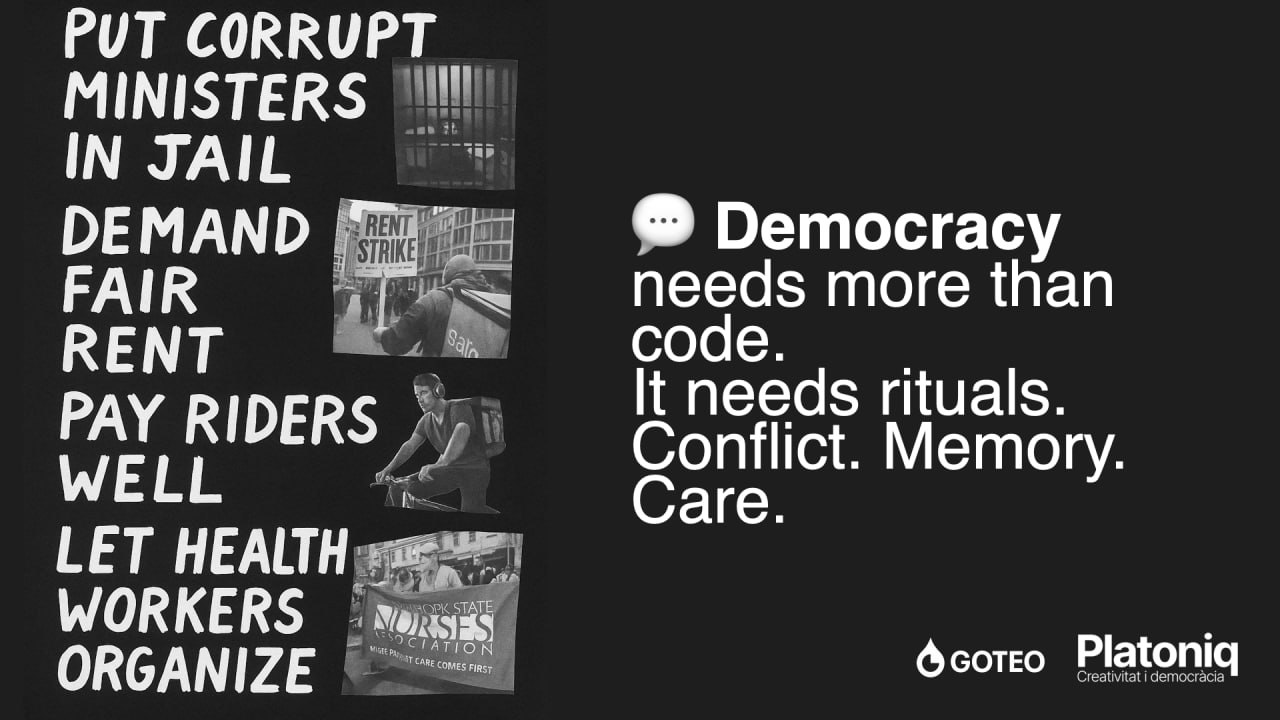 We think Goteo’s model is a genuinely unique piece of civil-society machinery: it focuses on the design, communication, and community-building work that transformative projects need before they can start, and once a project has hit its minimum threshold, funding becomes available for a team to get compensated for the work of building it. That’s a real answer to a tension every commons-based project runs into — balancing the “livelihood work” that has to be paid with the “love work” that so often isn’t. Goteo has been doing exactly that, deliberately, for over a decade.
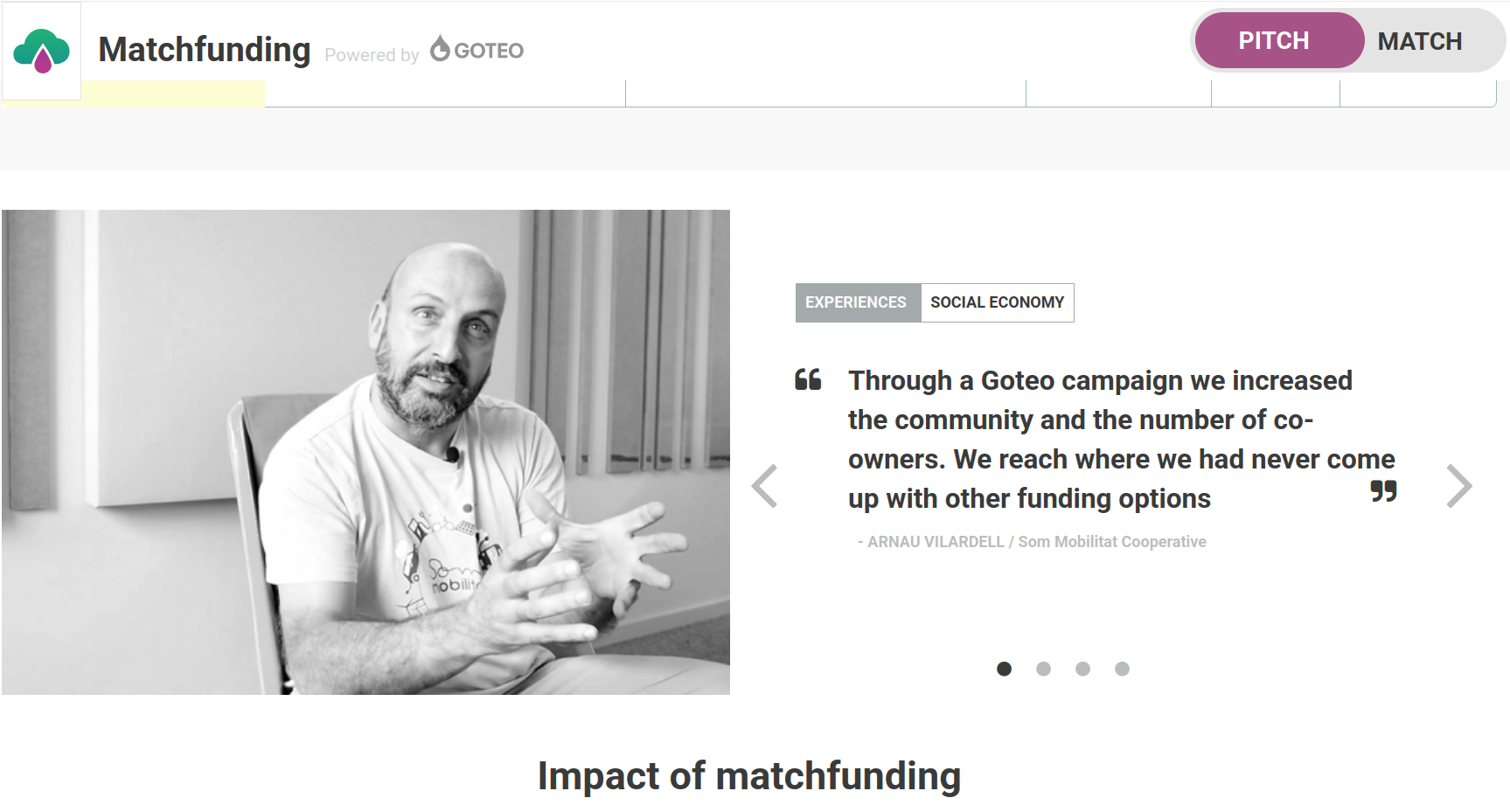 On top of individual crowdfunding, Goteo adds match-funding: institutions that want to see a particular kind of change in their region — a city council, a university — can add funding to projects that a community has already selected and partly funded itself. For an institution, this is comparatively low-risk, because the civic validation has already happened twice: once when the community decided which projects deserved to enter the match-funding programme, and again when people actually donated. Institutions like the City of Barcelona, which co-ran the match-funding programme behind our own CommonsCloud campaign, still set their own conditions and scope for what they’re willing to co-invest in.
It’s worth being explicit about how different this is from a typical shareholder investment, where the money has to be paid back with a return. Here, the investment goes into building social capacity: into transformative projects, into teams, into communities that share our mission. All of it is gift or donation based, so projects don’t have to spend their energy servicing debt — they can stay agile and stay focused on their actual purpose. That logic makes most sense for early-stage, commons- and public-value-aligned ventures, which is exactly where the DTF is trying to operate. Donors and funders still keep a stake in the communities they support: they’re kept informed, payments are released in stages tied to milestones, and a community audit process is built in to keep things transparent and accountable.
Prototyping this together, at DWeb Camp
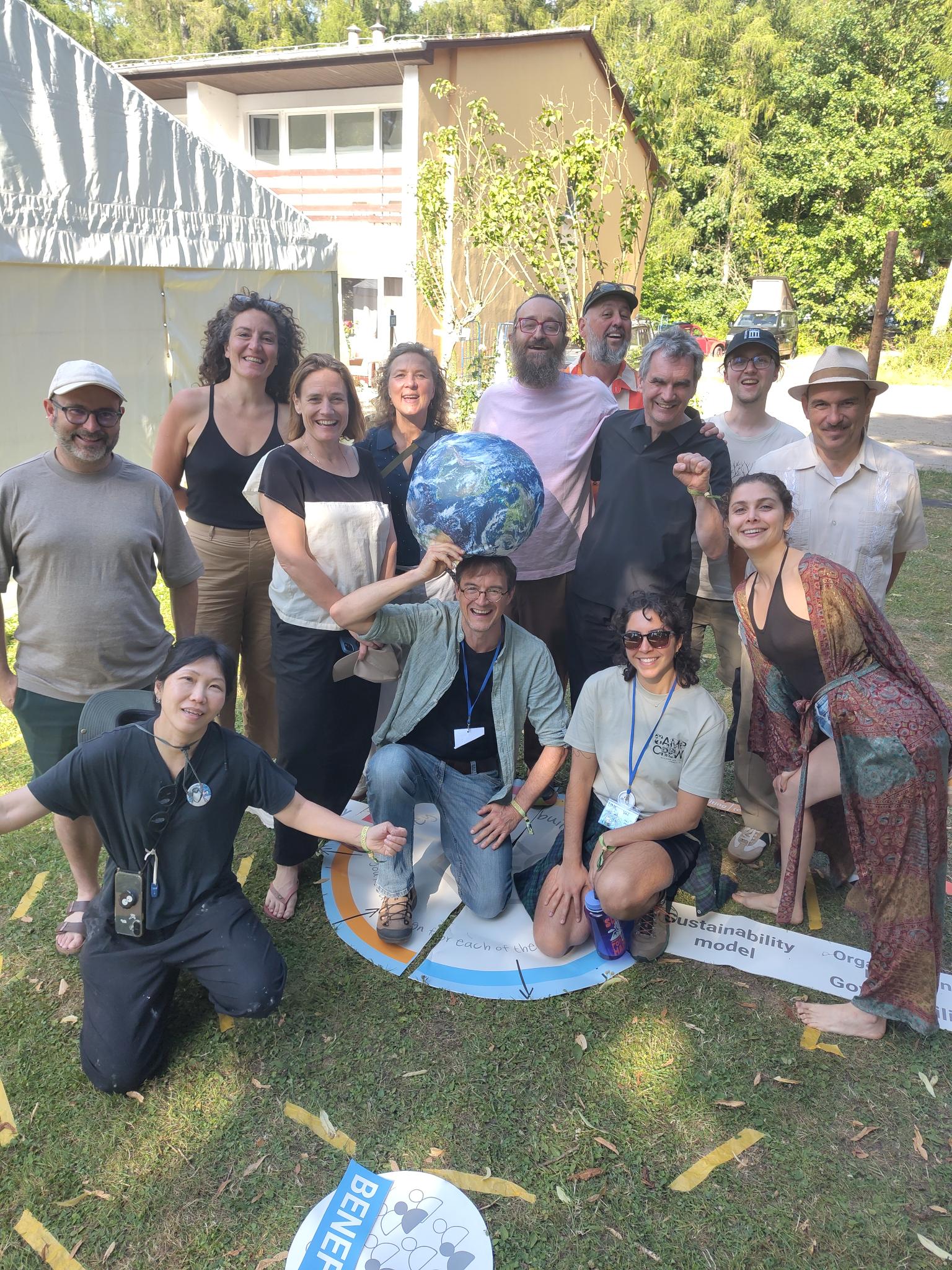 We’ve been building this next phase together with Goteo directly. At DWeb Camp 2026, held at Alte Hölle near Berlin, Olivier Schulbaum of Fundación Platoniq led a governance role-play session built around a baseball-diamond format: a project ran the bases, engaging with a different stakeholder at each corner, working out what each one would contribute, what level of participation they wanted, and what they expected in return — not just from the project, but from the platform itself. It was a genuinely useful way to surface what different governance stakes actually mean in practice, and the session fed directly into how we’re designing the DTF’s own governance.
At the same camp, in a session on sustaining infrastructure movements, Olivier shared the headline lesson from Goteo’s fifteen years: over €25 million mobilised from small donations into thousands of commons and civic projects, building resistance, collective memory, and popular capacity across the social and solidarity economy. One of the DTF’s first programmes, led by Fundación Platoniq, is ARCHICARE — building collective archives for and by feminist collectives working on resistance, memory, and care. It’s a direct continuation of the same civic machinery this story describes, now built for the DTF’s own community.
What we want this to inspire
We are featuring Goteo because its fifteen years of practice are the clearest working model we know of for what gift-based, match-funded, civic capital can actually do at scale. The Democratic Tech Fund exists to bring that model to bear on democratic technology specifically: mapping what already exists, connecting communities with the tools and funders that can help, and mobilising funding — seed support, crowdfunding, public-private match funding — to make sovereign digital infrastructure real.
Tell us what your community needs, what already exists near you, and what a cooperative funding model could look like where you are.
Get in touch with the Democratic Tech Fund → Support this work via Open Collective →
This story draws on our conversations with Olivier Schulbaum and Fundación Platoniq/Goteo.org, including sessions at DWeb Camp 2026. Explore the platform at goteo.org. This is a living document, v0.1 — corrections and additions welcome.
All funding is gift or donation based. Projects don't have to struggle to pay back debts — they can keep their model agile and directed at the core mission.